Reverse Mortgage in Fort Myers, FL
For many homeowners in Fort Myers, retirement brings a mix of excitement and financial questions. You’ve spent years — maybe decades — paying down your mortgage, and now you’re wondering how to make that investment work harder for you. If you’ve been researching a reverse mortgage in Fort Myers FL, you’ve probably found a lot of information online, some of it accurate and some of it outdated or oversimplified. Michael Schad, a local reverse mortgage specialist serving Fort Myers and the surrounding Lee County communities, put together this guide to give homeowners clear, straightforward answers about how reverse mortgages actually work and what they could mean for your retirement.
What Is a Reverse Mortgage?
A reverse mortgage is a loan available to homeowners, typically age 62 or older, that allows them to convert part of their home’s equity into funds they can use — without selling the home or taking on a new monthly mortgage payment. It works in the opposite direction of a traditional mortgage. Instead of making monthly payments to a lender to build equity, a reverse mortgage allows the homeowner to draw from equity they’ve already built, while continuing to live in and own their home.
The most common type of reverse mortgage is the Home Equity Conversion Mortgage (HECM), which is insured by the Federal Housing Administration (FHA). There are also proprietary reverse mortgage products, sometimes called jumbo reverse mortgages, designed for homeowners with higher-value properties that may exceed FHA lending limits. Michael Schad helps Fort Myers homeowners evaluate which type of reverse mortgage product, if any, best matches their goals and their property.
With any reverse mortgage, the loan balance is repaid when the homeowner sells the home, moves out permanently, or passes away. Until then, as long as the homeowner keeps up with property taxes, homeowners insurance, and basic maintenance, they can continue living in their home just as they always have.
Why Reverse Mortgages Are a Growing Topic in Fort Myers
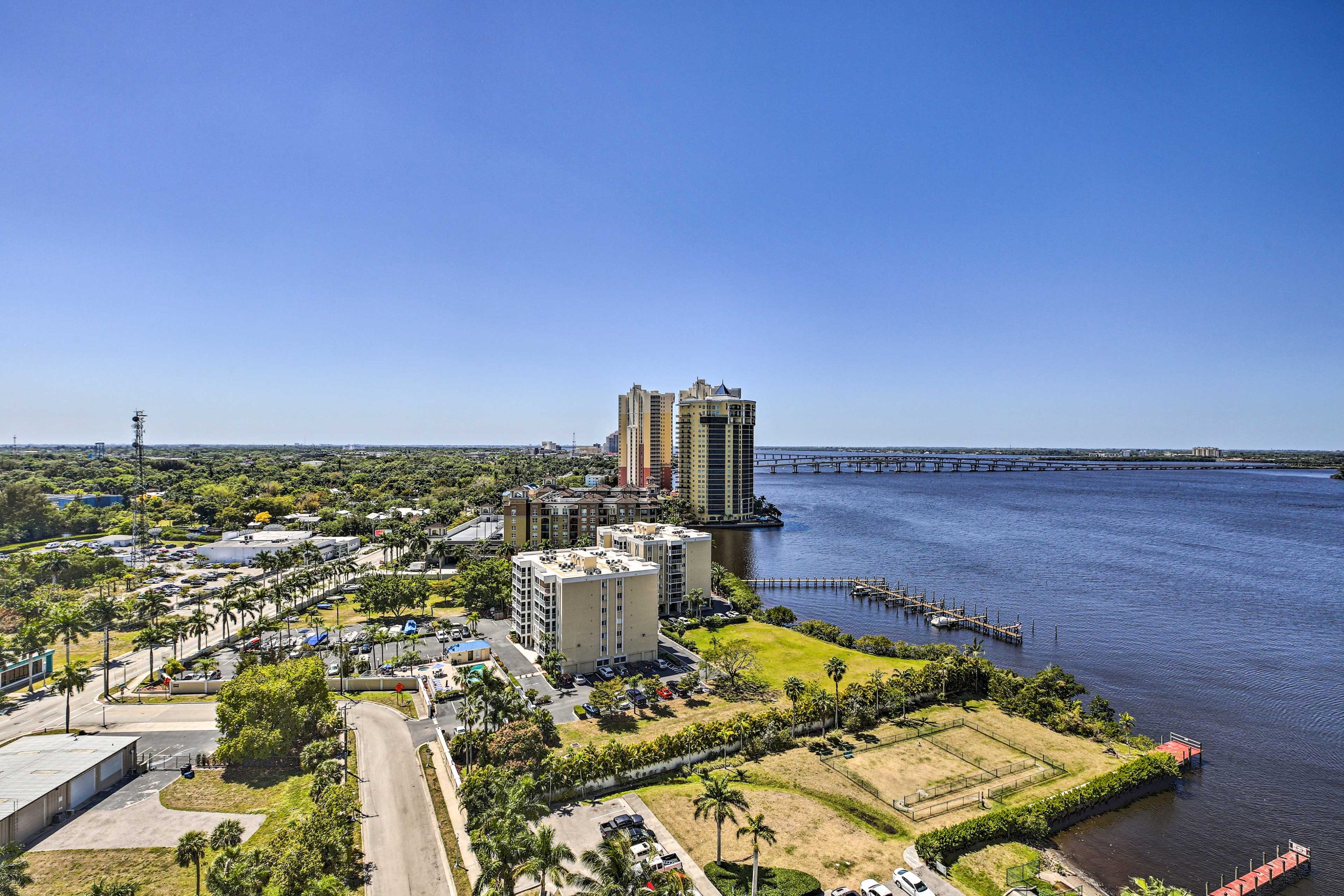
Fort Myers has become one of the most sought-after retirement destinations in Florida, and it’s easy to understand why. Warm winters, a relaxed pace of life, proximity to the Gulf beaches, and a lower cost of living compared to many other coastal markets have drawn retirees from across the country to neighborhoods throughout Lee County.
But living well in retirement takes planning. Rising homeowners insurance premiums, property taxes, and healthcare costs are real pressures for many local retirees, especially those living on a fixed income from Social Security or a pension. At the same time, a lot of longtime Fort Myers homeowners have built substantial equity in their homes, particularly if they purchased years ago before the area’s real estate market saw significant appreciation.
That combination — rising costs on one hand, and significant home equity on the other — is exactly why reverse mortgages have become such a common conversation among Fort Myers retirees. Instead of selling a home they love, moving away from family, friends, and familiar routines, many homeowners are discovering that a reverse mortgage allows them to unlock that equity while staying right where they are.
Michael Schad works with homeowners throughout Fort Myers, Cape Coral, Estero, Bonita Springs, San Carlos Park, and North Fort Myers to walk through exactly how a reverse mortgage could apply to their unique financial situation.
How Does a Reverse Mortgage Work?
Understanding the basic mechanics can help take the mystery out of the process. Here’s a simplified look at how a reverse mortgage typically works for a Fort Myers homeowner:
1. Equity Becomes Accessible Funds
Based on factors like the homeowner’s age, the home’s appraised value, current interest rates, and any remaining mortgage balance, a certain amount of home equity becomes available to borrow against.
2. Flexible Disbursement Options
Homeowners can typically choose how they’d like to receive their funds — as a lump sum, fixed monthly payments, a line of credit, or some combination of these. This flexibility allows the loan to be tailored to different retirement income needs and lifestyles.
3. No Required Monthly Mortgage Payments
Unlike a traditional mortgage or home equity loan, a reverse mortgage does not require the homeowner to make monthly payments toward the loan balance. The homeowner remains responsible for property taxes, homeowners insurance, and upkeep of the property, but the loan itself doesn’t require a monthly payment.
4. Repayment Happens Later
The loan becomes due when the last remaining borrower no longer lives in the home as their primary residence. At that point, the home is generally sold, and proceeds are used to repay the loan balance. Any remaining equity belongs to the homeowner or their heirs.
5. Non-Recourse Protection
For FHA-insured HECM reverse mortgages, the loan comes with a non-recourse feature, meaning the homeowner or their heirs will never owe more than the home is worth at the time the loan is repaid, even if the loan balance has grown over the years.
Who Qualifies for a Reverse Mortgage in Fort Myers, FL?
Qualification for a reverse mortgage depends on a combination of borrower and property factors. Generally, Fort Myers homeowners may be eligible if they:
- Are at least 62 years old (for HECM reverse mortgages; some proprietary products may have different age minimums)
- Own their home outright or have a low remaining mortgage balance that can be paid off using reverse mortgage proceeds
- Use the home as their primary residence
- Are able to keep up with ongoing property taxes, homeowners insurance, HOA dues (if applicable), and home maintenance
- Complete an independent, HUD-approved counseling session before finalizing an FHA-insured reverse mortgage
- Own a property type that qualifies, which often includes single-family homes, FHA-approved condominiums, and certain manufactured homes meeting FHA guidelines
Fort Myers has a wide mix of housing, from historic single-family homes near downtown to high-rise condos along the river and gated golf course communities throughout South Fort Myers. Because condo eligibility can vary depending on FHA approval status, Michael Schad helps homeowners confirm whether their specific property qualifies before moving forward.
The Reverse Mortgage Process: What to Expect
Michael Schad walks Fort Myers homeowners through a clear, step-by-step process designed to remove confusion and answer questions along the way:
Step 1: Initial Consultation
The process begins with an honest conversation about your financial goals. Are you hoping to eliminate a monthly mortgage payment? Create additional retirement income? Set up a financial cushion for emergencies? Your goals help shape which reverse mortgage option and disbursement method might be the best fit.
Step 2: Independent Counseling
For FHA-insured HECM reverse mortgages, federal guidelines require homeowners to complete a counseling session with an independent, HUD-approved counselor before moving forward. This session is designed purely to make sure you understand the loan, your responsibilities, and how it fits your overall financial picture — not to sell you anything.
Step 3: Application
Once counseling is complete, the formal loan application begins, along with gathering necessary financial and property documentation.
Step 4: Property Appraisal
An independent, licensed appraiser evaluates your Fort Myers home to determine its current market value, which helps establish how much equity is available.
Step 5: Underwriting
The lender reviews your documentation, the appraisal, and your counseling certificate to finalize loan approval.
Step 6: Closing and Funding
After approval, you’ll sign final loan documents at closing. Following a short rescission period required by law, funds become available according to the payout option you selected.
Throughout the entire process, Michael Schad remains available to Fort Myers homeowners to explain each document, answer questions, and make sure there are no surprises.
How Fort Myers Homeowners Use Reverse Mortgage Funds
One of the biggest advantages of a reverse mortgage is that there are no restrictions on how the funds can be used. Locally, Michael Schad has worked with Fort Myers retirees who use reverse mortgage proceeds for goals such as:
- Eliminating an existing mortgage payment, freeing up monthly income for everyday expenses
- Offsetting rising property taxes and homeowners insurance premiums, a growing concern throughout Southwest Florida
- Making home improvements, from kitchen and bathroom remodels to accessibility upgrades that support aging in place, like grab bars, ramps, or walk-in showers
- Supplementing monthly retirement income, especially helpful for those relying primarily on Social Security
- Establishing a reverse mortgage line of credit as a financial safety net for emergencies, medical expenses, or storm-related repairs after hurricane season
- Helping adult children or grandchildren with major expenses like education costs
- Delaying Social Security benefits, using reverse mortgage funds as a bridge so retirees can wait to claim benefits at a later, more advantageous age
- Buying a new home through a reverse mortgage for purchase program, which lets qualifying seniors buy a new primary residence using a combination of loan proceeds and their own funds — a popular choice for retirees relocating to Fort Myers
Reverse Mortgage vs. Other Home Equity Options
Homeowners in Fort Myers often want to know how a reverse mortgage stacks up against other ways to access home equity, like a home equity line of credit (HELOC) or a cash-out refinance. A few key differences worth understanding:
Monthly Payment Requirements
A HELOC or cash-out refinance typically requires ongoing monthly payments. A reverse mortgage does not require monthly mortgage payments, as long as the homeowner continues to meet their loan obligations, such as taxes and insurance.
Qualification Approach
Traditional home equity products often rely heavily on credit score and monthly income to assess a borrower’s ability to make payments. Reverse mortgages place more weight on the homeowner’s equity position and their capacity to maintain the property, which can make them more accessible to retirees living on fixed incomes.
Insurance and Protections
FHA-insured HECM reverse mortgages include built-in protections like the non-recourse guarantee. Proprietary reverse mortgages may offer different protections and terms, which is why comparing options with a knowledgeable local specialist matters.
Repayment Timeline
A HELOC generally must be repaid according to a set schedule, often with a draw period followed by a repayment period. A reverse mortgage, by contrast, is typically repaid when the home is sold or no longer used as the primary residence — a structure that suits many retirees looking to avoid new monthly obligations.
Why Fort Myers Homeowners Choose Michael Schad
Choosing the right reverse mortgage specialist is just as important as choosing the right loan. Here’s what sets Michael Schad apart for homeowners throughout Fort Myers and Lee County:
Deep Local Market Knowledge
From waterfront properties along the Caloosahatchee to inland communities in South Fort Myers, Cape Coral, and Estero, Michael Schad understands the nuances of the local real estate market and how they relate to reverse mortgage eligibility and value.
A Patient, No-Pressure Approach
Rather than rushing through paperwork, Michael Schad takes the time to walk through each part of the process in plain language, making sure homeowners feel confident, not confused.
Personalized Recommendations
Every homeowner’s financial picture is different. Michael Schad takes time to understand individual goals before recommending any specific reverse mortgage option or disbursement method.
Long-Term Support
The relationship doesn’t end at closing. Michael Schad remains a resource for Fort Myers homeowners with questions about their reverse mortgage well after the loan is finalized.
Take the Next Step Toward Understanding Your Reverse Mortgage Options
Retirement should feel like a reward for years of hard work, not a source of financial stress. For many homeowners across Fort Myers, a reverse mortgage offers a practical way to access built-up home equity, without giving up ownership or adding a new monthly mortgage payment.
If you’re curious whether a reverse mortgage in Fort Myers FL could fit into your retirement plans, Michael Schad is ready to help you explore your options with clear, honest, and locally informed guidance. Reach out today to schedule a conversation and take the first step toward understanding what a reverse mortgage could mean for your future in Fort Myers, FL.
Frequently Asked Questions About Reverse Mortgages in Fort Myers, FL
Do I have to make monthly payments on a reverse mortgage?
No. As long as you live in the home as your primary residence and stay current on property taxes, homeowners insurance, and basic upkeep, monthly mortgage payments are not required.
Can I lose my home with a reverse mortgage?
As with any mortgage, failing to meet loan obligations — such as paying property taxes and insurance or maintaining the home — can put homeowners at risk. As long as these obligations are met, the homeowner can remain in the home.
What happens to a reverse mortgage when the homeowner passes away?
The loan becomes due, and heirs typically have the choice to sell the home, refinance the balance, or otherwise settle the loan using the home’s value. With FHA-insured HECM reverse mortgages, heirs will never owe more than the home is worth.
Can I still leave my home to my children with a reverse mortgage?
Yes. Many homeowners with reverse mortgages leave their home to heirs, who can choose to repay the loan and keep the home, sell it, or explore other available options.
Is a reverse mortgage the same as a home equity loan or HELOC?
No. While both allow access to home equity, a reverse mortgage doesn’t require monthly payments and has a different qualification approach, often with added protections for FHA-insured products.